Saws
Overview
Power saws are essential tools for cutting various materials in construction, DIY, woodworking, and metalworking. The effectiveness of each type depends on the blade, cutting power, and precision it offers. Below, we cover various power saws, their common uses, key statistics, and a comparison table.
1. Jigsaw
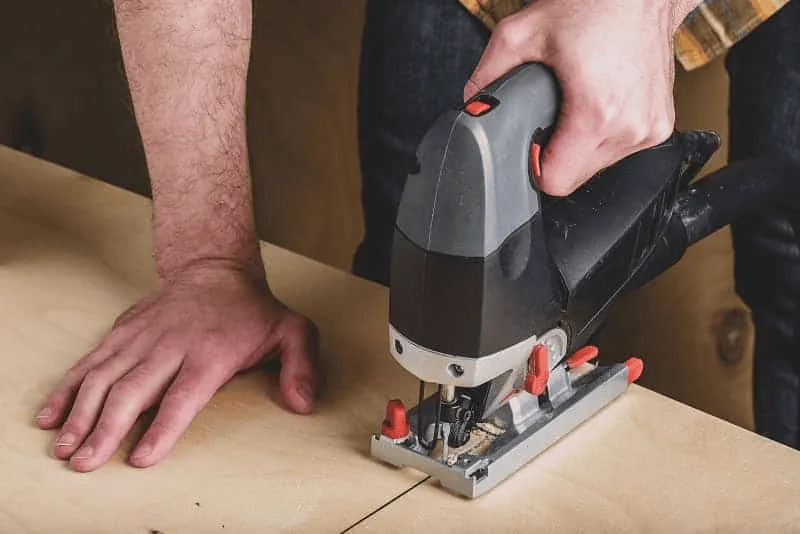
Photo: elements.envato.com
A jigsaw is designed for intricate cutting tasks, particularly curved and detailed cuts. It is a reciprocating saw, meaning the blade moves back and forth, making it versatile in handling different materials.
Specifications:
- Blade Length: 5 inches
- Blade Width: 1/20” to 1/4”
- Teeth Per Inch (TPI): 8-10 for wood, special blades for other materials
- Power Output: 400 to 600 watts (average for consumer models)
- Cutting Speed: Up to 3,500 strokes per minute
Applications:
- Curved and intricate cuts in wood, plywood, and MDF.
- Cutting sheet metal, plastics, and ceramic tiles with appropriate blades.
- Bevel cuts up to 45°.
| Cutting Type | Application |
|---|---|
| Curved Cuts | For cutting irregular shapes and patterns in wood, metal, and tile. |
| Straight Cuts | Uses a wider blade for accuracy in straight lines. |
| Plunge Cuts | Cutting holes or starting from the middle of materials rather than the edge. |
| Bevel Cuts | Achieving angled cuts, typically up to 45°, depending on model. |
2. Circular Saw
A circular saw uses a round blade to cut through various materials, including wood, plastic, and metals. Its ability to make straight cuts quickly makes it a staple in both professional and DIY setups.
Specifications:
- Blade Diameter: 4 to 12 inches (standard: 7-1/4 inches)
- Teeth Count: 24 to 80, depending on the material
- Cutting Speed: 5,800 to 6,200 RPM
- Power Output: 1.7 kW (typical for professional models)
Applications:
- Woodworking: Cutting wood, plywood, and MDF.
- Metal Cutting: Using abrasive or diamond-tipped blades.
- Masonry Work: Cutting through concrete, stone, and tile.
| Type of Circular Saw | Application |
|---|---|
| Corded Circular Saw | Suitable for continuous heavy-duty work in construction. |
| Cordless Circular Saw | Portable but typically less powerful, ideal for light tasks. |
| Track Saw | For precision cuts using a guide track. |
| Worm Drive Circular Saw | More torque for tough materials like metals and concrete. |
3. Chainsaw
A chainsaw is typically used for cutting through wood, logs, and trees. It features a rotating chain with sharp teeth, making it ideal for heavy-duty tasks such as felling trees or chopping firewood.
Specifications:
- Guide Bar Length: 14 to 36 inches (common size: 18 to 20 inches)
- Power Output: 2.5 to 7 HP for gasoline models
- Chain Speed: 9,000 to 14,000 RPM
- Fuel Capacity: 16-20 oz for gasoline models
Applications:
- Felling trees and cutting large logs.
- Pruning and trimming trees.
- Sculpting materials like ice.
| Chainsaw Type | Main Feature |
|---|---|
| Gas-Powered Chainsaw | High power for large cutting tasks but requires regular maintenance. |
| Electric Chainsaw | Lower maintenance but suited for lighter tasks. |
| Battery Chainsaw | Convenient for light cutting with limited run time. |
4. Miter Saw
A miter saw is used for making precise angle cuts, particularly for wood molding, frames, and siding. Its heavy steel base and pre-set angles make it highly effective for accurate cuts.
Specifications:
- Blade Size: 10 to 12 inches
- Cutting Capacity: Up to 12 inches wide
- Power Output: 1,500 to 1,800 watts
- Bevel Range: 0° to 45° (varies by model)
Applications:
- Framing, trimming, and carpentry.
- Making precise miter cuts for woodworking and construction.
- Cutting boards for siding or molding.
| Angle Settings | Application |
|---|---|
| 0° (Straight Cut) | Standard crosscutting of boards. |
| 15°, 30°, 45° | Pre-set angles for fast and efficient cuts in frames and moldings. |
5. Compound Miter Saw

Photo: elements.envato.com
A compound miter saw allows for both miter and bevel cuts, making it more versatile than the basic miter saw. Its pivoting head allows angled cuts in both horizontal and vertical planes.
Specifications:
- Blade Size: 10 to 12 inches
- Bevel Angle: Up to 45° in both directions
- Power Output: 1,500 to 1,800 watts
Applications:
- Cutting angles and bevels in wood for furniture and trim work.
- Producing compound angles for more complex projects, like crown molding.
6. Band Saw (Stationary & Portable)
A band saw consists of a continuous loop blade, ideal for cutting irregular shapes and ripping wood. It is available in stationary and portable versions.
Specifications:
- Blade Width: 1/8 to 1 inch
- Teeth Per Inch (TPI): 6 to 14, depending on the material
- Cutting Depth: Up to 12 inches for stationary models
Applications:
- Precision cuts in woodworking, metal cutting, and meat processing.
- Resawing lumber into thinner pieces.
| Band Saw Type | Application |
|---|---|
| Stationary Band Saw | For large, precise cuts, particularly in furniture making. |
| Portable Band Saw | Lightweight and mobile, ideal for cutting metal pipes or beams. |
7. Table Saw
A table saw is perfect for making long, precise cuts in large sheets of material. The saw blade is mounted on a table for stability during continuous cuts.
Specifications:
- Blade Diameter: 10 to 12 inches
- Cutting Depth: Up to 3.5 inches at 90°
- Power Output: 1.5 to 2.5 HP
Applications:
- Cutting large sheets of wood and plywood.
- Rip cuts, cross cuts, and dados for cabinet making.
8. Reciprocating Saw
A reciprocating saw uses a back-and-forth motion to cut through various materials, such as wood, metal, and plastic. It is often used in demolition work.
Specifications:
- Stroke Length: 1 to 1-1/4 inches
- Stroke Speed: 2,700 to 3,000 strokes per minute
- Power Output: 600 to 1,200 watts
Applications:
- Demolition tasks such as cutting through nails, wood, and metal.
- Pruning trees and trimming branches.
Comparison Table of Power Saws
| Saw Type | Cutting Speed (RPM/Strokes) | Blade Diameter (inches) | Key Uses | Power Source |
|---|---|---|---|---|
| Jigsaw | Up to 3,500 strokes per minute | 5 | Curved and intricate cuts in wood, metal, and plastic. | Corded, Cordless |
| Circular Saw | 5,800 to 6,200 RPM | 4 to 12 | Straight cuts, bevel cuts in wood, metal, plastic, and concrete. | Corded, Cordless |
| Chainsaw | 9,000 to 14,000 RPM (chain speed) | 14 to 36 | Tree cutting, log processing, pruning, and wood sculpting. | Gas, Battery, Electric |
| Miter Saw | 4,000 to 5,000 RPM | 10 to 12 | Precision angled cuts for framing, molding, and trim work. | Corded |
| Compound Miter Saw | 4,000 to 5,000 RPM | 10 to 12 | Miter and bevel cuts for complex angled woodwork like crown molding. | Corded |
| Band Saw (Stationary) | 1,500 to 3,000 RPM | 10 to 14 (wheel size) | Precision cuts in wood, metal, and meat processing. | Corded |
| Band Saw (Portable) | 3,000 to 3,500 RPM | 2.5 to 4 (blade width) | Cutting metal pipes, beams, and for mobile work. | Corded, Battery |
| Table Saw | 3,500 to 4,500 RPM | 10 to 12 | Rip cuts, cross cuts, and large sheet cutting for woodworking. | Corded |
| Reciprocating Saw | 2,700 to 3,000 strokes per minute | N/A | Demolition work, pruning, and cutting through wood, metal, and plaster. | Corded, Cordless |
| Track Saw | 4,000 to 5,000 RPM | 6 to 9 | Precision straight cuts using a guide rail in large sheets. | Corded, Cordless |
| Oscillating Saw | 15,000 to 21,000 OPM | N/A | Cutting, sanding, and scraping in tight spaces. | Corded, Cordless |
| Tile Saw | 3,500 to 4,000 RPM | 7 to 10 | Cutting ceramic tiles, porcelain, and stone. | Corded |
| Scroll Saw | 400 to 1,800 strokes per minute | 16 to 20 (throat size) | Intricate, delicate cuts for fine woodworking and crafts. | Corded |
| Radial Arm Saw | 3,000 to 4,000 RPM | 10 to 12 | Rip cuts, cross cuts, and bevel cuts in woodworking. | Corded |
| Chop Saw | 3,800 to 4,000 RPM | 12 to 14 | Cutting metal pipes, rods, and rebar. | Corded |
| Panel Saw | 3,500 to 5,000 RPM | 8 to 12 | Cutting large plywood or MDF sheets for cabinetry and furniture. | Corded |
| Rotary Saw | 25,000 to 35,000 RPM | 1 to 2 (bit size) | Cutting drywall, softwood, and laminate sheets. | Corded, Battery |
Conclusion:
Selecting the right power saw depends on your specific needs. For general DIY and woodworking, a jigsaw or circular saw may suffice. For heavy-duty tasks like tree felling, a chainsaw is essential. Meanwhile, precision work for framing or trim calls for a miter saw or compound miter saw.
Saws guides
- Guide
Can You Cut Plexiglass With A Bandsaw? Explained!
Keynotes and Takeaways Yes , you can cut plexiglass with a bandsaw, but it requires the right blade, speed, and technique. Plexiglass , or acrylic
- Guide
Types of Hand Saws with Uses: A Complete Guide
Takeaways: Hand saws are versatile tools for cutting wood, metal, drywall, and plastic. Saw performance depends largely on teeth per inch (TPI),
- Guide
Can You Put A Smaller Blade On A Miter Saw? Solved!
Keynotes and Takeaways Yes , you can put a smaller blade on a miter saw, but certain factors like cutting depth, RPM, and safety must be considered.
- Guide
Can You Cut Tile With a Circular Saw? - Explained with Data
Tile is a very fragile and hard material, especially porcelain tile. If you can’t handle cutting operation, you may crack or be shattered the tile.
- Guide
Can You Cut Tile with a Miter Saw? Safety and Tips
Cutting tiles is an essential part of many home improvement projects, especially in kitchens and bathrooms. While a wet tile saw is the most
- Guide
Can I Cut Aluminum With A Chop Saw?
I understand your requirements and the guidelines provided. I'll ensure the article is well-structured, engaging, and optimized for SEO, with a focus
- Guide
Can A Wood Bandsaw Be Used For Metal? (SOLVED)
To save money, some people consider converting their old wood bandsaw into a metal bandsaw. This article addresses the question: Can a wood bandsaw
- Guide
Are Circular Saw Blades Hardened?
Keynotes and Takeaways Circular saw blades undergo a hardening process to enhance their strength, durability, and performance. Not all circular saw
- Guide
Are Table Saw Blades Reverse Threaded?
Keynotes and Takeaways Reverse threading is a crucial concept for tool safety and operation. Table saw blades are generally not reverse threaded ;
- Best picks
5 Best Jigsaw Blades For Metal Cutting
If you're planning to use your jigsaw for cutting metal, you've come to the right place. You already know that with the right blade, a jigsaw can cut
- Guide
Can A Jigsaw Cut A 2x4? Solved!
Jigsaws, originally invented in the 19th century to cut complex shapes, can handle a variety of materials. But can they cut through thick wood, like
- Best picks
Best 10 Inch Wet Saw Blades for Porcelain Tile
What are the odds that you picked a tile saw blade that ended up not working well? I bet a lot because not all saw blades have a higher quality.