1/4-20 Tap Drill Bit Size: What Size to Use and Why
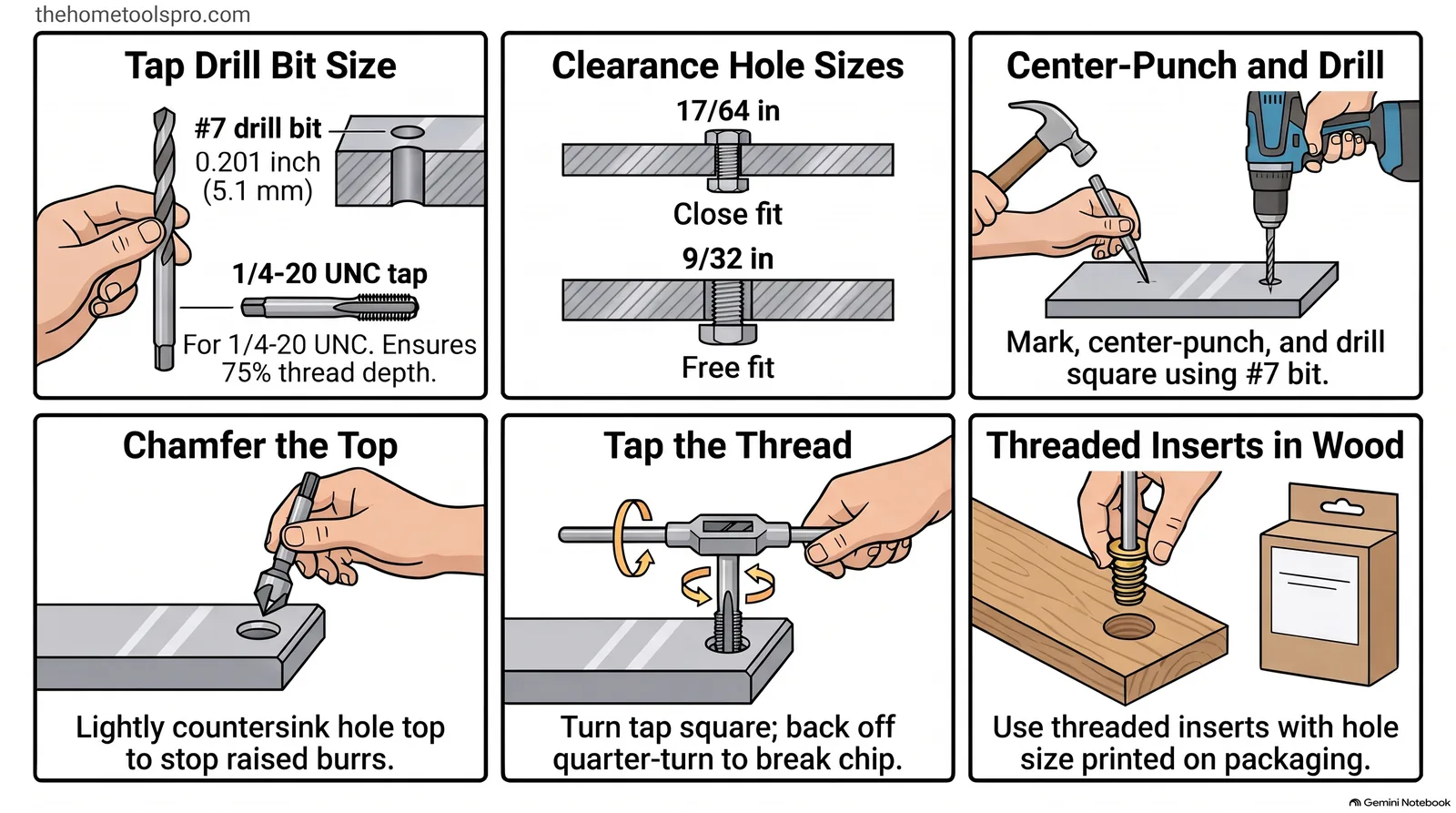
The tap drill for a 1/4-20 UNC thread is a #7 drill bit, 0.201 inch (5.1 mm). It leaves enough metal for about 75% thread depth, which is the standard for tapped holes: strong enough for the bolt, and not so tight that the tap binds or snaps. If you don’t have a #7, a 13/64-inch bit (0.203 in) is the nearest fractional size and gives almost the same thread.
“1/4-20” means a quarter-inch screw diameter with 20 threads per inch. It’s the coarse (UNC) thread, used for general bolts, machine screws and the standard camera and tripod mount.
Hole sizes for a 1/4-20 at a glance
| Hole | Bit | Diameter |
|---|---|---|
| Tap drill (to cut threads) | #7 | 0.201 in / 5.1 mm |
| Tap drill, fractional substitute | 13/64 in | 0.203 in |
| Tap drill, metric substitute | 5.1 mm | 0.201 in |
| Clearance hole, close fit | 17/64 in | 0.266 in |
| Clearance hole, free fit | 9/32 in | 0.281 in |
The tap drill is always smaller than the screw, because the tap cuts the threads into the wall of the hole. A clearance hole is always bigger, because the bolt should slide through it and thread into a nut or a tapped hole on the other side.
The fine-thread version, 1/4-28 UNF, takes a #3 drill (0.213 in). For every other UNC, UNF, metric and pipe thread, see the tap drill size chart.
Why a #7 and not a 1/4-inch bit
A 1/4-inch bit makes a hole the same size as the screw, so there’s nothing left for the tap to cut and the screw just slides through. A much smaller bit, such as 3/16 inch, leaves so much metal that the tap has to cut a full-depth thread; it takes a lot of force and tends to break small taps, especially in steel.
The #7 sits between the two. Charts list it for a 75% thread. Machining references note that a deeper thread adds little holding strength but makes the tap much harder to turn, which is why 75% became the standard.
How to drill and tap a 1/4-20 hole
- Mark and center-punch the hole so the bit doesn’t wander.
- Drill with a #7 bit square to the surface. A drill press keeps it straight; with a hand drill, check the angle from two sides. In steel use cutting oil and a moderate speed.
- Chamfer the top of the hole lightly with a countersink or a bigger bit. It helps the tap start straight and stops a raised burr.
- Tap the thread. Hold the tap square in a tap wrench, turn it in, and back it off a quarter to half a turn every turn or so to break the chip. Use cutting oil in steel; aluminum and brass tap easily with a little oil or none.
- For a blind hole (one that doesn’t go through), drill deeper than the thread you need, and finish with a bottoming tap if the thread must reach close to the bottom.
Threaded inserts in wood
Wood is too soft to hold a tapped 1/4-20 thread for long. Use a threaded insert instead: the insert has the 1/4-20 thread inside and a coarse thread or barbs outside. The hole size for the insert depends on its outside diameter and on the wood, so use the size printed on the insert’s packaging rather than the #7 tap drill.
Related sizes
The #7 bit is also a common size on its own. What size is a number 7 drill bit covers its exact size in inches and millimeters and the sizes either side of it. For screws used in wood, the drill bit size for a #10 screw lists pilot and clearance holes.
Related guides
Frequently asked questions
Can I use a 13/64 drill bit for a 1/4-20 tap?
Yes. A 13/64-inch bit is 0.203 inch, only 0.002 inch bigger than a #7, so the thread is very slightly shallower. It's the usual substitute when a #7 isn't in the set.
What size hole does a 1/4-20 bolt go through?
A 17/64-inch hole (0.266 in) for a close fit, or a 9/32-inch hole (0.281 in) for a free fit that allows a little misalignment. A 1/4-inch hole is too tight for the bolt to pass through easily.
What metric drill bit is the same as a #7?
5.1 mm is the closest metric size (0.2008 in). 5.0 mm is a little small and makes tapping harder in steel.
Related guides
- Guide
Hole Saw Sizes: Chart From 3/4 in to 6 in and Uses
Standard hole saw sizes in inches and mm, what each size cuts, which hole saw type suits wood, metal, tile and masonry, and how to cut a clean hole.
- Best picks
6 Best Brad Point Drill Bit Sets for Woodworking
Brad point drill bit sets for clean, accurate holes in wood: what the center spur does, sizes and shank types, plus six sets compared.
- Guide
Can You Drill Through Cast Iron? Bits, Speed and Steps
Yes, cast iron can be drilled with cobalt or TiN-coated HSS bits. Which bit, what speed, why gray iron is drilled dry, and the step-by-step method.